Call us (08) 8536 5888
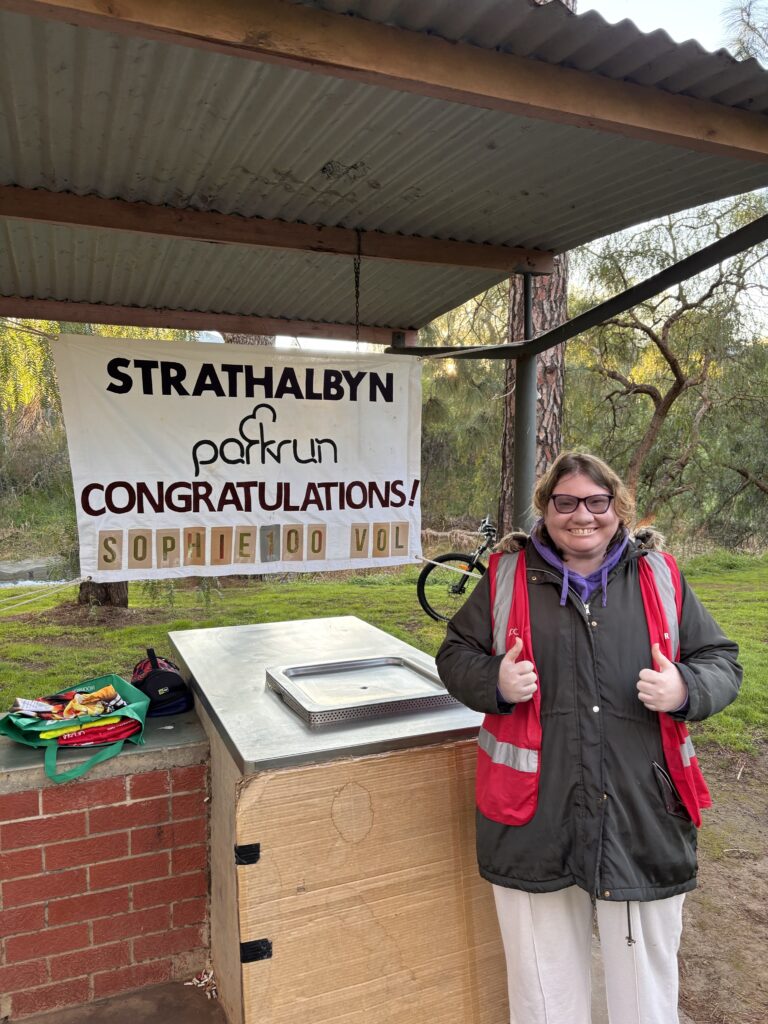
Most Saturdays, while a lot of us are still asleep, Sophie is up at 6.30am and heading to Strathalbyn parkrun. She’s been doing it for around three years, and she’s just clocked up her 100th time volunteering.
If you haven’t come across it, parkrun is a free, timed 5km event held every Saturday morning at hundreds of locations across Australia, and thousands more around the world. It runs entirely on volunteers, and that’s where Sophie comes in.
Over 100 mornings, Sophie has taken on just about every job going: timekeeping, scanning barcodes, handing out finish tokens, photography, and tail walking. She also delivers the first-timers’ briefing, standing up in front of a group of runners to talk them through how it all works. Strathalbyn is her home run, but she’s also volunteered at Mount Barker and Parkindula Reserve parkruns.
It’s a proper commitment. An early alarm, a regular team to show up for, and a role to own. Along the way Sophie has built friendships, become a familiar face in the local parkrun community, and taken on more responsibility with every event. It’s exactly the kind of thing her NDIS goals are about: being part of her community, connecting with people, and doing something that’s hers.
“I’ve just completed my 100 parkrun, makes me feel very proud. I like being out in the community to help others out.
I’ve done a few different roles, first timers briefing, finish tokens handing them out, I’ve done tail walker, I do like finish token and I do like photography. I like meeting new people and being involved in something.” – Sophie
Getting there week after week takes a bit of teamwork. Sophie is supported by Livit team members Katie, Elyce, Brett, Gemma and Sam, who are there alongside her every step of the way.
One hundred down. We reckon she’ll be there again this Saturday.
Congratulations, Sophie, from everyone at Livit.
After several years of supporting clients and building strong relationships with them, Renee realised she wanted to make an even bigger difference, not only for clients, but for the teams supporting them too.
She joined Livit’s Emerging Leadership Program to build the confidence and skills needed to step into leadership roles and continue growing in her career. The program gives support workers the opportunity to develop leadership skills through training, mentoring and hands-on experience.
One of the most valuable parts of Livit’s Emerging Leadership Program has been the chance to learn directly from experienced leaders.
During the program, Renee learned more about communication, teamwork, and supporting staff in a respectful and professional way. She also learned more about managing conflict, staying calm under pressure and creating a positive team culture.
The hands-on experience and training helped her step outside her comfort zone and build confidence in speaking up, making decisions and supporting other staff.
The paid work shadowing component also helped prepare Renee to step into an Acting Team Leader role.
One of the biggest lessons Renee has taken from the program is that leadership isn’t just about making decisions.
For support workers thinking about leadership, Renee says it’s normal to feel unsure at first, but the right support can make all the difference.
The project is looking at how AI could help people with intellectual disability, families, carers and support workers notice changes in a person’s physical or mental health earlier, so they can get help sooner.
At this stage, researchers would like to speak with people who are:
If you choose to take part, you will have a one-on-one interview with a UNSW researcher. It will take about 40 minutes. Taking part is completely your choice, and you can give your consent verbally before the interview starts.
What people share in these interviews will help guide the next part of the project, including future co-design workshops.
If you would like to know more or take part, you can contact UNSW Research Fellow Cathy O’Callaghan by emailing c.ocallaghan@unsw.edu.au or calling 0415 511 177. You can also read the Participant Information and Consent Form to learn more about what taking part involves.
We know that tools like this only work when they are shaped by the people who will use them. If this sounds like you, we encourage you to learn more and consider taking part.
Know Me, Support Me is led by the University of New South Wales (UNSW), with support from disability, health and research organisations, including Livit Disability Support.